

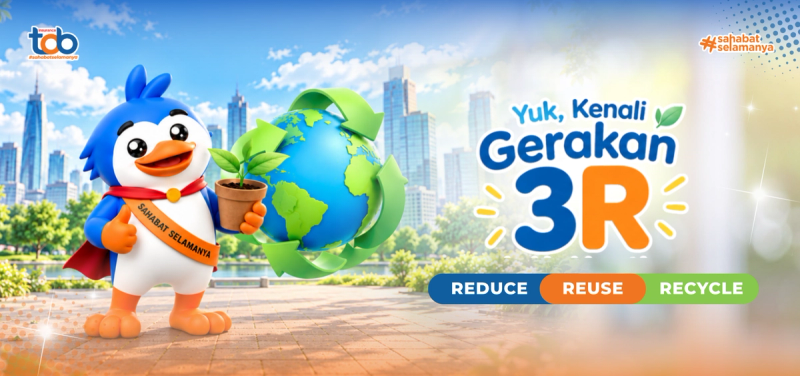
Understanding the 3Rs: Reduce, Reuse, Recycle, and Examples in Everyday Life
Keeping the environment clean and healthy starts with our daily habits. One simple way to contribute is by reducing the amount of waste we generate every day. The use of single-use plastics, discarding items that are still usable, and improper waste management can contribute to environmental pollution.
One way to help address these issues is by applying the 3R principles: Reduce, Reuse, and Recycle. These principles encourage us to minimize waste, reuse items that are still in good condition, and recycle materials so they can be put to further use.
So, what do the 3Rs mean, and how can we apply them in our everyday lives? Let’s take a closer look!
What Are the 3Rs?
The 3Rs are a waste management concept based on three main principles: reducing waste, reusing items, and recycling materials. Applying these principles can help reduce the amount of waste generated while encouraging more responsible use of resources.
Here is an explanation of each principle, along with practical examples.
1. Reduce: Minimize Waste from the Start
Reduce means limiting the use of items that may generate waste. This principle emphasizes using products according to our needs and avoiding unnecessary consumption.
Examples of how to practice Reduce include:
- Bringing your own reusable water bottle when going out.
- Using reusable shopping bags.
- Avoiding single-use packaging when suitable alternatives are available.
- Using paper wisely and avoiding unnecessary printing.
By reducing the use of items that generate waste, we can help minimize waste at its source.
2. Reuse: Give Usable Items a Second Life
Reuse means using items again when they are still safe and suitable for their intended purpose. This helps extend their useful life and prevents them from becoming waste too soon.
Examples of how to practice Reuse include:
- Reusing food containers that are still safe and suitable for use.
- Turning cardboard boxes into storage containers.
- Using shopping bags multiple times.
- Finding new uses for secondhand items that are still functional.
These simple habits can help reduce waste while making better use of the items we already have.
3. Recycle: Turn Waste Materials into Useful Products
Recycle refers to processing used materials into new materials or products that can be used again.
Examples of how to practice Recycle include:
- Sorting paper and cardboard for recycling facilities.
- Collecting plastic bottles according to the types accepted by recycling facilities.
- Turning organic waste, such as dry leaves and vegetable scraps, into compost using appropriate methods.
- Taking recyclable materials to suitable collection points or waste banks.
For recycling to be more effective, waste should be sorted according to its type and the requirements of the relevant recycling facility.
What Are the Benefits of Applying the 3Rs?
Practicing the 3Rs consistently can provide several benefits, including:
- Reducing waste: Helping decrease the amount of waste sent for final disposal.
- Conserving resources: Encouraging more responsible use of products and materials.
- Protecting the environment: Helping reduce the risk of pollution caused by improper waste management.
- Building positive habits: Encouraging people to take greater responsibility for the waste they generate.
These benefits can become more significant when the 3Rs are practiced collectively at home, at school, in the workplace, and throughout the community.
How to Start Practicing the 3Rs at Home
Applying the 3Rs does not require major changes. You can start with simple steps that are easy to incorporate into your daily routine:
- Bring your own shopping bag and water bottle when going out.
- Buy items according to your needs.
- Reuse items that are still safe and suitable for use.
- Sort waste according to its type.
- Encourage family members to adopt better waste management habits.
The key is consistency. By making these small actions part of our daily routine, we can contribute to long-term efforts to reduce waste and protect the environment.
Conclusion: Small Steps Toward a Better Environment
Reduce, Reuse, and Recycle are three simple steps that can help minimize waste and protect the environment. By reducing unnecessary consumption, reusing items that are still in good condition, and recycling suitable materials, we can contribute to more responsible waste management.
Let’s start with ourselves and make the 3Rs part of our everyday lives. Small, consistent actions can be the beginning of positive change for the environment and future generations.
For more information about tob Insurance services, you can contact tob Insurance Customer Care by phone at 021-3117-8000 or via WhatsApp at 0823-7035-1000.


